Audio · Visual
Sound you feel, hardware you never see
Distributed landscape audio spreads even, low-volume sound across the whole yard instead of blasting from two patio speakers — plus weatherproof TV mounting.
What we install
Outdoor audio and video systems
Two systems, one install — sound that covers the whole yard and a TV built to live outside.
Distributed landscape audio
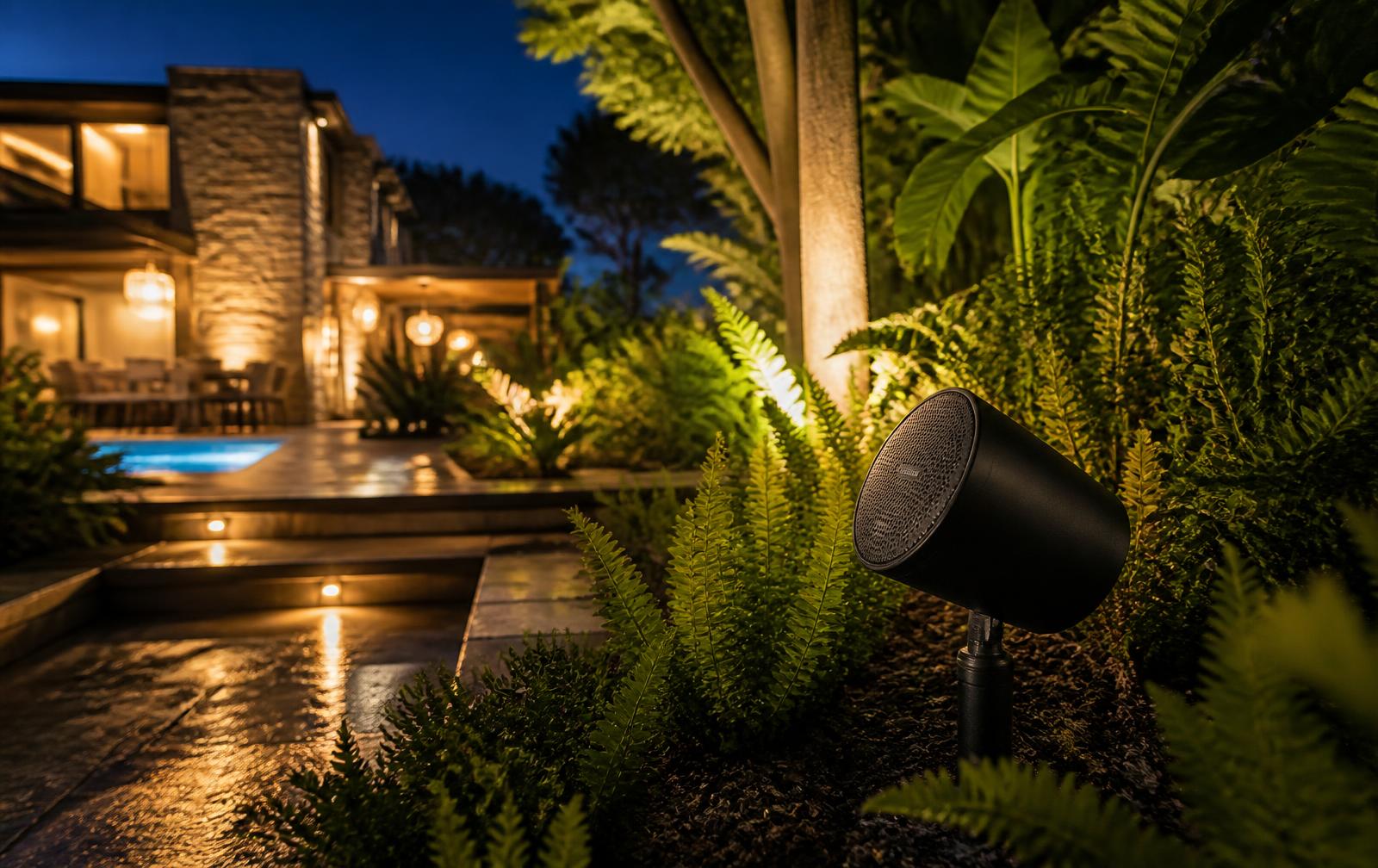
Six to eight satellites in the planting beds with a buried subwoofer: even coverage at conversation volume, and nothing carrying into the neighbor's yard.
- Weatherproof satellites hidden in landscaping
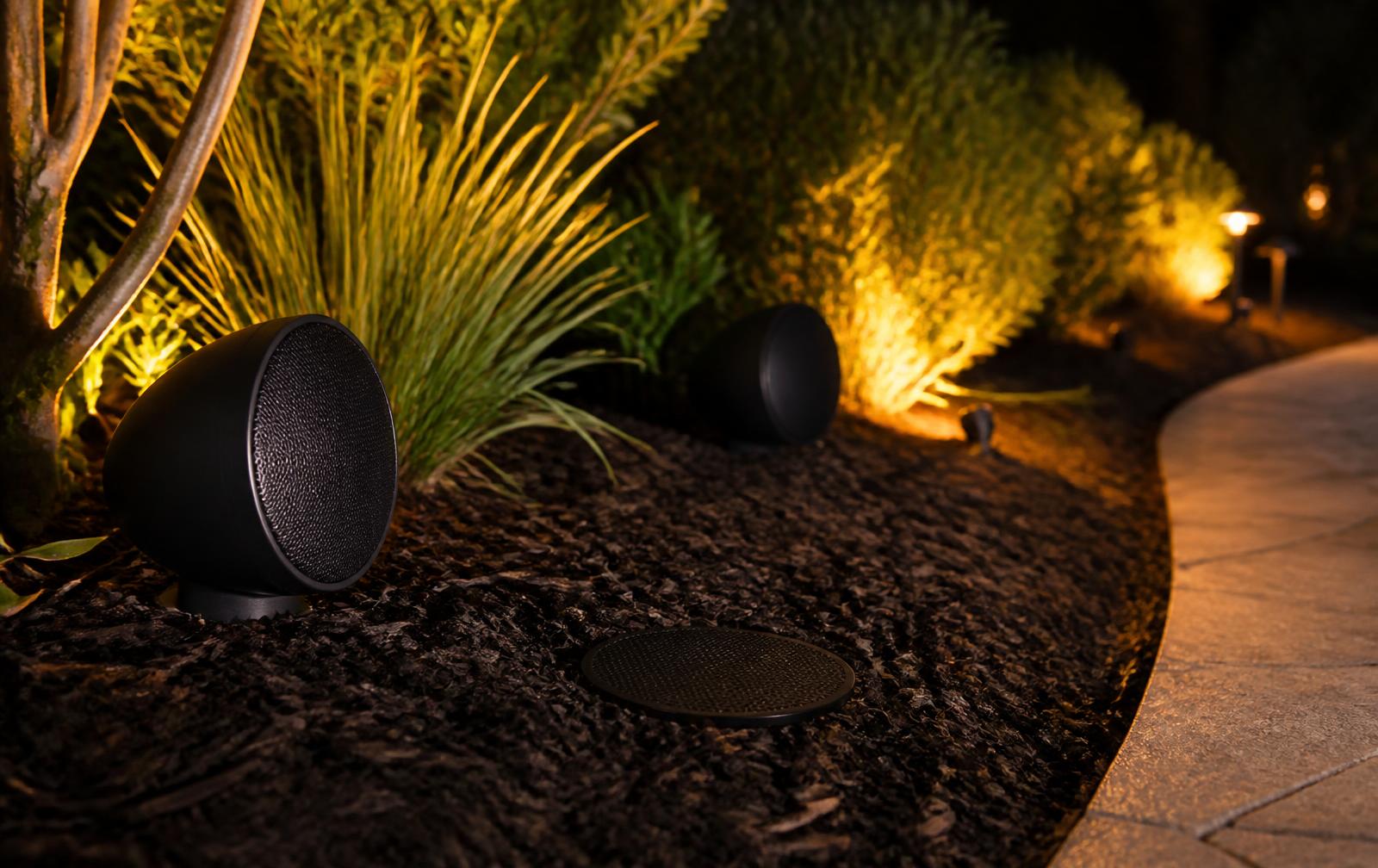
- Buried subwoofer for warmth without volume
- Zoned to match your lighting scenes
TV mount
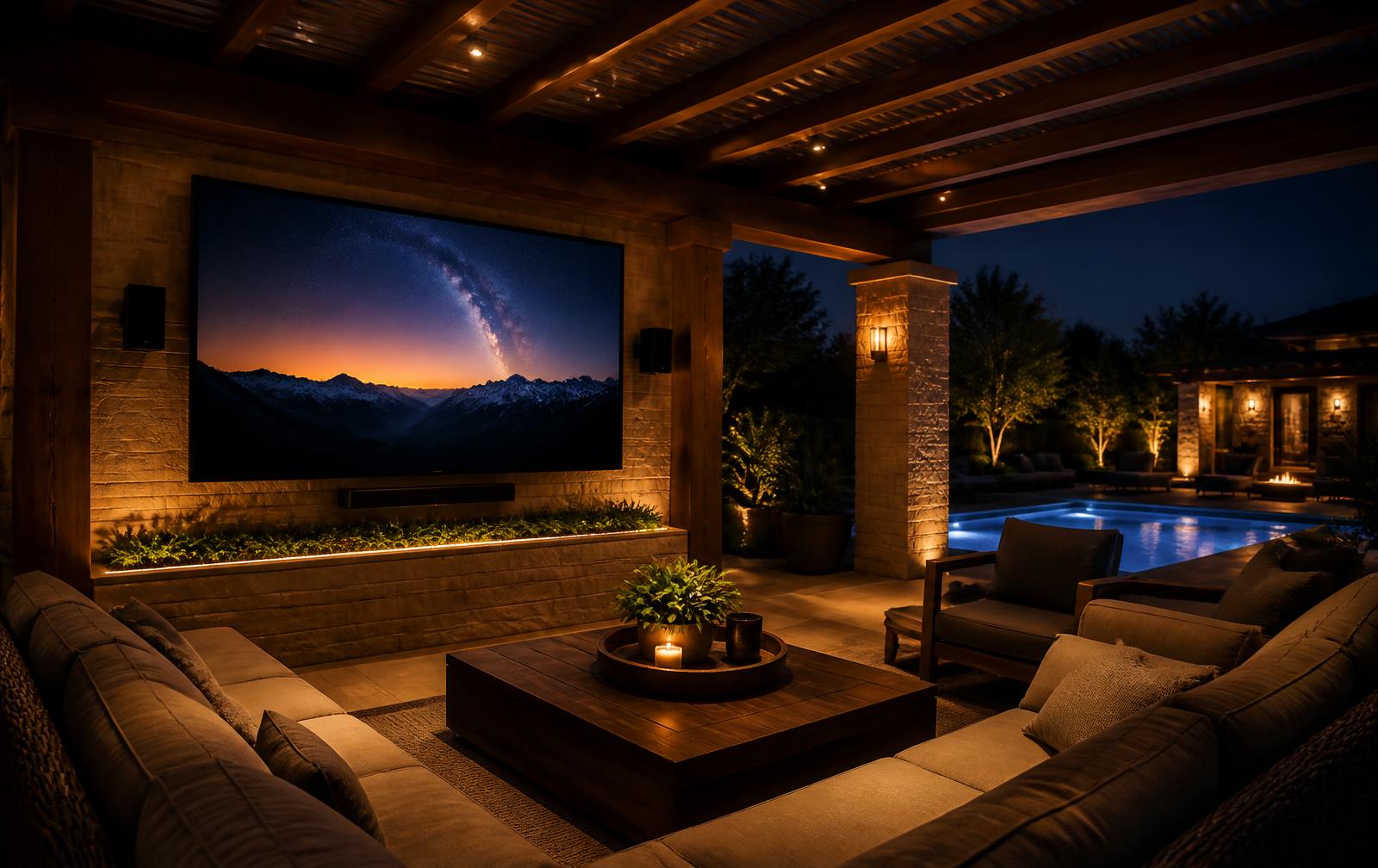
Full-sun rated televisions mounted on patios, cabanas and pool decks, integrated with the same app that runs your lights.
- Sun-readable outdoor-rated displays
- Concealed cabling and covered mounting
- Single-app control for lights, sound and TV
What's included
Every outdoor A/V install covers this
A fixed scope, so nothing new appears on the quote after the trench is open.
Design & layout
- On-site acoustic walk of the yard
- Speaker and subwoofer placement plan
- Zone map matched to your lighting scenes
- Written scope and fixed-price quote
Installation
- Weatherproof satellites set in planting beds
- Buried subwoofer with drainage bed
- Direct-burial wire in conduit, no visible runs
- Amplifier and rack in a ventilated enclosure
- Outdoor TV mounting and cable concealment
Tuning & handoff
- Volume and EQ balanced zone by zone
- Neighbor-friendly output limits set
- App control for lights, sound and TV
- Walkthrough with your household
- Follow-up visit after the first month
Why it pairs with lighting
One trench, one crew, one control app
Audio and lighting together means one trench, one set of conduit and no second contractor cutting into finished landscaping.
Satellite speakers
Six to eight low-output satellites branch off the main conduit run and terminate in planting beds, hidden behind foliage.
Buried subwoofer
The subwoofer sits in a gravel drainage bed off the same trench, with only a flush grille left visible in the mulch.
TV mount
A dedicated power and signal run feeds the outdoor TV mount, with cabling concealed behind the wall plate and articulating bracket.
01
Mark & cut
Runs are chalked along bed edges and hardscape lines, turf cut cleanly for replacement.
02
Open one trench
A single ~8" trench carries both audio and lighting conduit — no second dig later.
03
Pull & terminate
Direct-burial wire is pulled through conduit and terminated at each satellite and the subwoofer.
04
Backfill & restore
Trench is compacted, turf and mulch reset, then the system is tuned zone by zone.
FAQ
Outdoor audio and video questions we get asked
How many outdoor speakers does a typical backyard need?
Most Orange County backyards we do run six to eight small satellite speakers plus one buried subwoofer. Spreading that many low-output speakers around the yard gives even coverage at conversation volume instead of two loud patio speakers blasting from one corner.
Are the speakers actually hidden?
Yes. Satellites are matte black or bronze and sit low in planting beds behind foliage, and the subwoofer is buried with only a flush grille visible in the mulch. From the patio you hear the system without seeing it.
Will the speakers survive rain, sprinklers and salt air?
The satellites and subwoofers we install are rated for permanent outdoor exposure, and the amplifier lives in a ventilated weather-rated enclosure. On coastal properties we specify marine-grade hardware for the salt air.
How is the wiring run — will you tear up my landscaping?
We use direct-burial speaker wire pulled through conduit in the same trench as the lighting runs, tucked along bed edges and hardscape lines. Turf and planting are cut cleanly and put back; if lighting and audio go in together it's one trench instead of two.
Can you add audio to an existing lighting system?
In most cases yes. We check the existing transformer, conduit and low-voltage runs first, then reuse whatever path we can so the new audio wiring doesn't require reopening finished landscaping.
How long does installation take?
A typical audio-only backyard is one to two days on site. Adding a TV mount usually pushes it to two or three days. Larger properties with multiple zones or new circuits can run three to five days, and we give you the exact schedule with the quote.
How do I control the system?
Everything runs from one app on your phone — audio zones, lighting scenes and the TV. We set the zones and volume limits during tuning and walk your household through it before we leave.
Will the neighbors hear it?
That's the point of distributed audio. Many small speakers at low output keep the sound inside your yard, and we set output limits during tuning so the system can't be pushed past a neighbor-friendly level.
Keep exploring
Related services
Landscape Lighting Design
Path, uplighting and architectural fixtures designed for your property after dark.
String Light Installation
Overhead ambient light for patios, pergolas and pool decks — built to stay up.
Lighting Maintenance
Diagnostics and tune-ups for lighting and audio, whether we installed it or not.
Areas we serve
Outdoor AV across Orange County
Same crew, same standards, from the Palos Verdes bluffs through South County. Pick your city for how we approach the work there.
- Outdoor AV in Newport Beach
- Outdoor AV in Newport Coast
- Outdoor AV in Corona del Mar
- Outdoor AV in Huntington Beach
- Outdoor AV in Irvine
- Outdoor AV in Laguna Beach
- Outdoor AV in San Clemente
- Outdoor AV in Laguna Niguel
- Outdoor AV in Coto de Caza
- Outdoor AV in Yorba Linda
- Outdoor AV in Anaheim Hills
- Outdoor AV in Long Beach
- Outdoor AV in Los Alamitos
See the full list of areas we serve.
Schedule a Consultation
Hear it in your own backyard
We demo audio and lighting together on site so you can judge coverage and volume.
Orange County since 2002 · Local crew · No obligation